
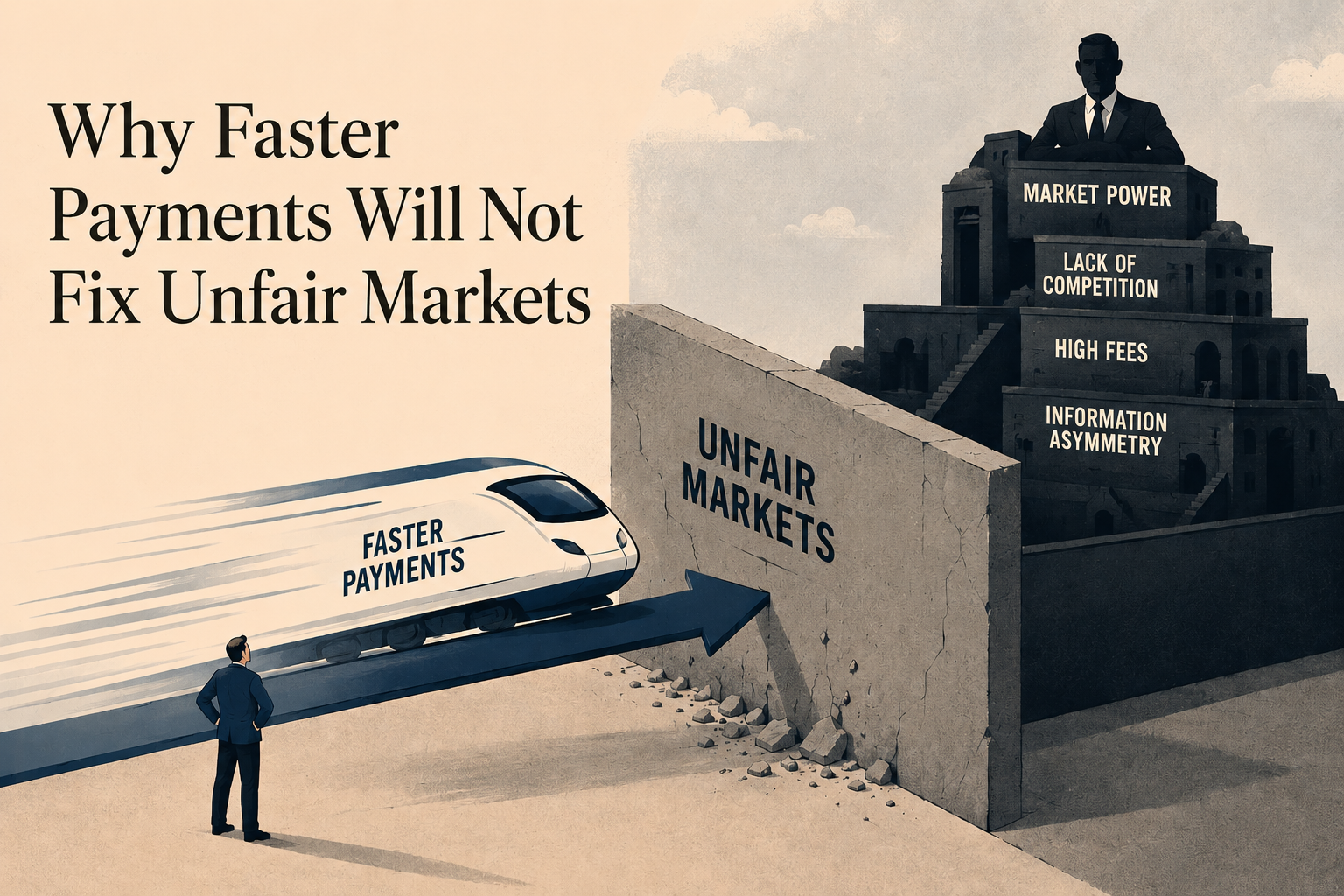
The moment of payment should be the cleanest part of commerce. A service has been delivered, a product has been sold, value has changed hands, and money should follow. Yet for too many small businesses, freelancers and workers, getting paid is not a moment at all. It is a process: chasing, waiting, reconciling, borrowing, apologising to one’s own suppliers and sometimes quietly absorbing the loss. This is the hidden economy of payment friction. It does not appear neatly on a card terminal receipt or a bank statement. It sits in delayed payroll decisions, postponed hiring, personal credit cards used as working capital, and the emotional cost of opening a banking app with one eye closed. In the UK, late payments remain one of the most persistent constraints on small business growth. A 2025 FSB-commissioned survey found that 60 per cent of small business owners said late payments were holding back growth, while 63 per cent spent time chasing overdue payments. The real cost of getting paid is not simply the fee attached to a transaction. It is the inequality of control. A payment method is not just infrastructure. It is a cultural signal about who has power, who gets trusted, who waits, and who gets to move quickly. Large organisations talk about innovation in payments, automation and open banking; smaller businesses ask more basic questions. Why has this invoice not cleared? Which payment method should I offer? What does the fee really mean? How do I protect cash flow without damaging a client relationship? These are not unsophisticated questions. They are operating questions. And in a digital economy, operating knowledge has become a form of capital. The UK has made real progress on payment infrastructure. Faster Payments changed expectations around bank transfers. Open banking — which allows customers to share banking data securely with regulated third parties — has created new possibilities for cheaper, faster and more flexible payments. The FCA and Payment Systems Regulator said in 2025 that open banking had more than 11.7mn active users and that open banking payments exceeded 22.1mn a month. Variable recurring payments, which allow consumers to authorise flexible bank payments within agreed limits, could give businesses an alternative to card-based models and reduce some processing costs. But better rails do not automatically create fairer outcomes. The existence of a tool does not mean people can use it well, trust it, or negotiate around it. This is where the payments debate often loses its human centre. Policymakers and industry leaders can be tempted to assume that if infrastructure improves, inclusion follows. It does not. Inclusion follows when people have the skills, confidence and bargaining power to benefit from infrastructure. That gap is now visible across the workforce. The government has acknowledged that digital exclusion still affects one in four Britons, with digitally excluded consumers facing higher costs for essentials such as insurance, travel and food. Ipsos research for Lloyds Banking Group also found that while 82 per cent of UK adults had the essential digital skills needed for work in 2024, only 48 per cent could complete the full set of 20 workplace digital tasks measured. The same research pointed to a widening gender divide: 52 per cent of men could complete all 20 tasks, compared with 44 per cent of women. Those figures should disturb anyone who believes financial inclusion can be solved by product design alone. Payments are becoming more digital, more automated and more data-driven. At the same time, the people most likely to be underpaid, undercapitalised or underrepresented are often expected to navigate these systems with the least training. Women, migrants, younger workers, creative freelancers and microbusiness owners are told to be resilient. Too often, resilience is just the polite word for absorbing costs that better-resourced actors have outsourced onto them. Late payment is the clearest example. The government’s 2024 package on late payments noted that poor payment practices cost SMEs thousands of pounds a year and drag on productivity, while FSB research has repeatedly shown that late payment affects millions of small firms. The Small Business Commissioner’s 2025 research estimated late payments cost the UK economy almost £11bn a year, with 14,000 businesses closing annually because of them. It also estimated that affected businesses spend an average of 86 hours a year chasing late payments. Eighty-six hours is not an accounting inconvenience. It is two working weeks. The cultural damage is harder to measure but just as serious. When a small supplier waits 60 days to be paid by a larger client, the message is not merely financial. It says: your time is flexible, your margin is negotiable, your anxiety is not our problem. That power asymmetry undermines trust in markets. It also limits ambition. A founder who is constantly chasing cash cannot plan. A freelancer waiting on payment cannot invest in training. A worker with low financial confidence is less likely to challenge unfair terms, compare products or use new tools effectively. This is why payment reform must be treated as a skills and equity issue, not only a technology or compliance issue. We need stronger enforcement against poor payment practices, but enforcement alone will not close the gap. We need digital financial skills embedded into workforce development, enterprise support and procurement standards. If a business is expected to adopt new payment tools, it should also be supported to understand settlement times, chargeback risk, direct debit mandates, fraud exposure and cash-flow forecasting. These are not niche financial topics. They are basic survival knowledge in a digital economy. Industry has a role here too. Banks, FinTechs and payment providers like to speak about empowering users. Empowerment should mean more than a smoother interface. It should mean transparent pricing, plain-language explanations, accessible education and product journeys designed for people who do not already speak the language of finance. There is no virtue in making a payment experience feel effortless if the economics remain opaque. The UK has an opportunity to lead on this, precisely because it has both sophisticated
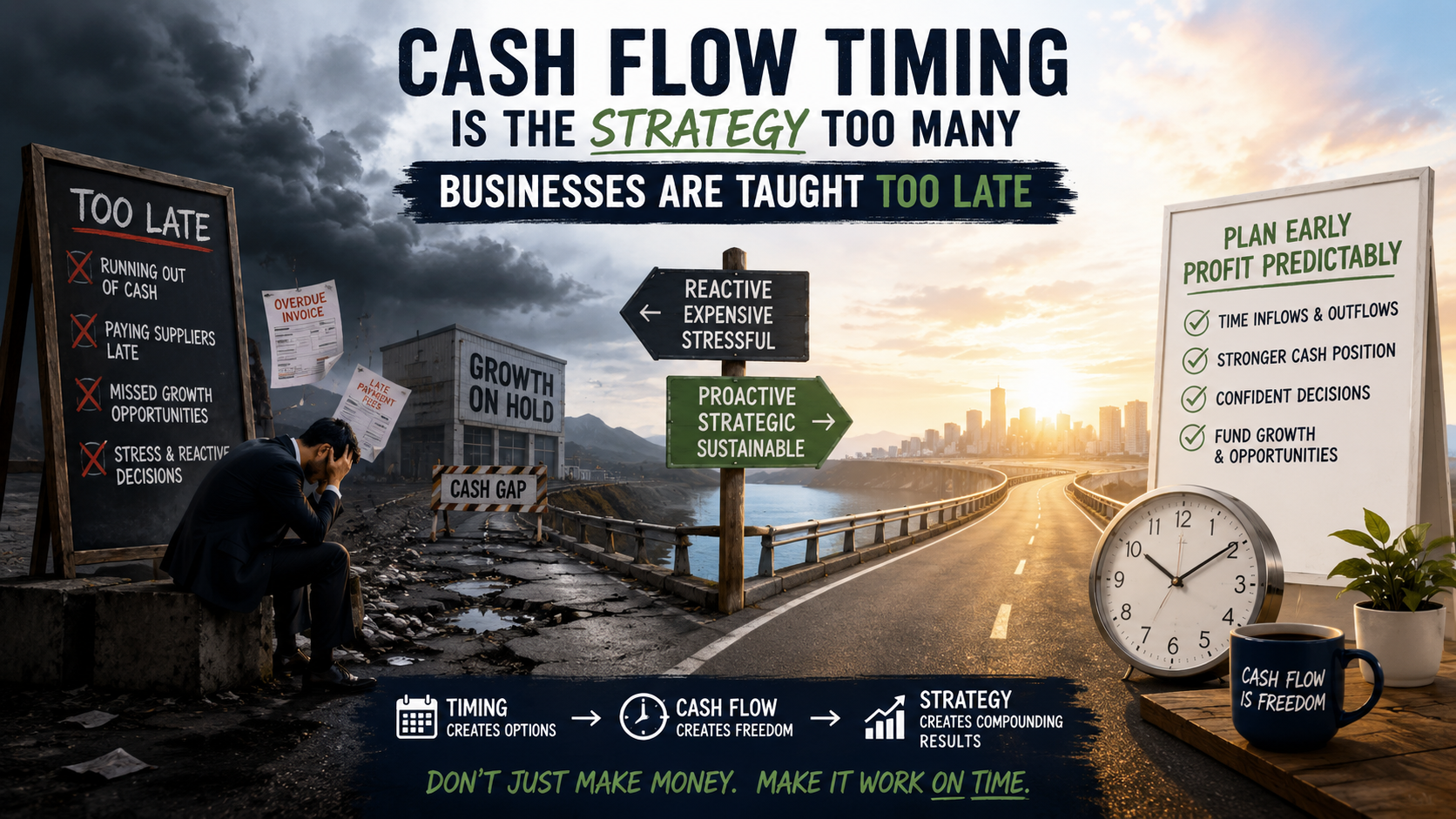
Cash flow timing is the strategy too many businesses are taught too late
Cash flow timing is the strategy too many businesses are taught too late By Yanka Golemin The first cash flow lesson many founders learn is not about profit. It is about waiting. Waiting for an invoice to clear. Waiting for a customer payment that was promised last Friday. Waiting for funds to settle while payroll, rent, tax and supplier bills move with far less patience. In those moments, the distinction between a viable business and a vulnerable one becomes painfully narrow. The business may have customers, revenue and demand. What it may not have is time. This is the part of finance that still receives too little attention. We teach people to ask how much money they have, how much they owe and how much they earn. We spend far less time teaching them to ask when money moves. Yet in the real economy, timing is often where financial pressure begins. It is where delayed payments become overdraft fees, where strong sales become working capital strain, and where ambition becomes hesitation. In the UK, this is not a theoretical concern. Research commissioned by the Department for Business and Trade and the Office of the Small Business Commissioner estimated that late payments cost the UK economy almost £11bn a year, with about 14,000 businesses closing annually because of them. More than 1.5mn businesses are affected each year, and firms are owed an estimated £26bn in late payments at any given time. These figures should make us pause. They show that cash flow timing is not a back-office inconvenience. It is an economic drag. I came to financial services through a different door: technology, cyber crime prevention, education and culture — fields that each reveal how people behave when systems become complex, opaque or unequal. That vantage point shaped the founding insight behind Vogue Boost. Money is never only technical. It is cultural, emotional and practical. People learn finance not in abstract models, but in the everyday rhythms of work, shopping, bills, credit, aspiration and survival. When those rhythms are misunderstood, the consequences are not evenly distributed. This matters because timing advantages already exist. Large companies have treasury teams, procurement leverage and sophisticated working capital strategies. Banks can price liquidity. Platforms can monetise speed. Investors understand runway. But many workers, small businesses and first-time founders experience timing only as stress. They know the feeling of being paid too late and charged too early, but they are rarely given the language or tools to make sense of it. That gap has become more expensive as the economy has become more digital. Open banking in the UK processed 351mn payments in 2025, a 57 per cent increase on the previous year, while user connections reached 16.5mn by December. This is progress. Faster, more connected financial infrastructure can help households and businesses see their money more clearly and move it more efficiently. But visibility is not the same as understanding. A dashboard may show that a shortfall is coming. It does not teach a founder how to renegotiate payment terms, sequence a tax liability, adjust purchasing, price for delayed settlement, or decide whether short-term credit is worth the cost. An app may show a worker that their bills cluster before payday. It does not change the fact that rent, childcare, energy payments and subscription charges may all arrive before income does. The interface has improved faster than the understanding behind it. This is where financial education has often failed. Too much of it remains abstract: budgeting, saving, compound interest, risk. These concepts matter, but they do not always meet people at the point of operational pressure. A small business owner does not only need to know that cash flow matters. She needs to know how invoice terms, customer concentration, payment delays, card fees and stock cycles interact. A worker does not only need to know that debt is costly. He needs to understand why timing mismatches can turn ordinary expenses into recurring financial penalties. There is a reasonable objection here. Cash flow timing cannot compensate for undercapitalisation, low wages, unequal bargaining power or a late payment culture. It would be wrong, and politically convenient, to tell small firms and households that better literacy alone can solve structural unfairness. Financial education must not become the polite language we use to excuse bad market design. But the answer is not to dismiss timing as too small or too technical. The answer is to treat it as shared economic infrastructure. Policy should reduce avoidable timing harm. Large buyers should not use small suppliers as unwilling lenders. Employers should recognise that pay cycles affect financial resilience. FinTech companies should design products that build judgement, not dependency. And education providers should stop treating operational financial knowledge as specialist knowledge reserved for finance teams. The UK has begun to move in this direction. The Fair Payment Code, reforms to payment reporting and discussions around e-invoicing all point to a recognition that payment behaviour affects productivity and survival. Sage research with Cebr, based on more than 1.2mn anonymised invoices, found that 44 per cent of invoices were paid late and estimated that £112bn was locked up in late payments. Whether one accepts every estimate or not, the direction is clear: money delayed is not neutral. It changes decisions. At the same time, the skills challenge is broader than small business finance. Lloyds Banking Group’s 2025 Essential Digital Skills report found that 82 per cent of UK labour force adults had essential digital skills for work, unchanged since 2023, leaving a significant minority without the digital capability now required for modern economic participation. The OECD has also warned that unequal access to 21st-century skills, including literacy, numeracy and problem-solving, constrains both fairness and growth. Cash flow timing sits at the intersection of these gaps: financial literacy, digital capability and economic agency. For women and underrepresented founders, this is especially important. Access to capital is already uneven. Networks are uneven. Confidence can be uneven because experience is uneven. If timing knowledge is