

Cash flow timing is the strategy too many businesses are taught too late
By Yanka Golemin
The first cash flow lesson many founders learn is not about profit. It is about waiting.
Waiting for an invoice to clear. Waiting for a customer payment that was promised last Friday. Waiting for funds to settle while payroll, rent, tax and supplier bills move with far less patience. In those moments, the distinction between a viable business and a vulnerable one becomes painfully narrow. The business may have customers, revenue and demand. What it may not have is time.
This is the part of finance that still receives too little attention. We teach people to ask how much money they have, how much they owe and how much they earn. We spend far less time teaching them to ask when money moves. Yet in the real economy, timing is often where financial pressure begins. It is where delayed payments become overdraft fees, where strong sales become working capital strain, and where ambition becomes hesitation.
In the UK, this is not a theoretical concern. Research commissioned by the Department for Business and Trade and the Office of the Small Business Commissioner estimated that late payments cost the UK economy almost £11bn a year, with about 14,000 businesses closing annually because of them. More than 1.5mn businesses are affected each year, and firms are owed an estimated £26bn in late payments at any given time. These figures should make us pause. They show that cash flow timing is not a back-office inconvenience. It is an economic drag.
I came to financial services through a different door: technology, cyber crime prevention, education and culture — fields that each reveal how people behave when systems become complex, opaque or unequal. That vantage point shaped the founding insight behind Vogue Boost. Money is never only technical. It is cultural, emotional and practical. People learn finance not in abstract models, but in the everyday rhythms of work, shopping, bills, credit, aspiration and survival. When those rhythms are misunderstood, the consequences are not evenly distributed.
This matters because timing advantages already exist. Large companies have treasury teams, procurement leverage and sophisticated working capital strategies. Banks can price liquidity. Platforms can monetise speed. Investors understand runway. But many workers, small businesses and first-time founders experience timing only as stress. They know the feeling of being paid too late and charged too early, but they are rarely given the language or tools to make sense of it.
That gap has become more expensive as the economy has become more digital. Open banking in the UK processed 351mn payments in 2025, a 57 per cent increase on the previous year, while user connections reached 16.5mn by December. This is progress. Faster, more connected financial infrastructure can help households and businesses see their money more clearly and move it more efficiently. But visibility is not the same as understanding.
A dashboard may show that a shortfall is coming. It does not teach a founder how to renegotiate payment terms, sequence a tax liability, adjust purchasing, price for delayed settlement, or decide whether short-term credit is worth the cost. An app may show a worker that their bills cluster before payday. It does not change the fact that rent, childcare, energy payments and subscription charges may all arrive before income does. The interface has improved faster than the understanding behind it.
This is where financial education has often failed. Too much of it remains abstract: budgeting, saving, compound interest, risk. These concepts matter, but they do not always meet people at the point of operational pressure. A small business owner does not only need to know that cash flow matters. She needs to know how invoice terms, customer concentration, payment delays, card fees and stock cycles interact. A worker does not only need to know that debt is costly. He needs to understand why timing mismatches can turn ordinary expenses into recurring financial penalties.
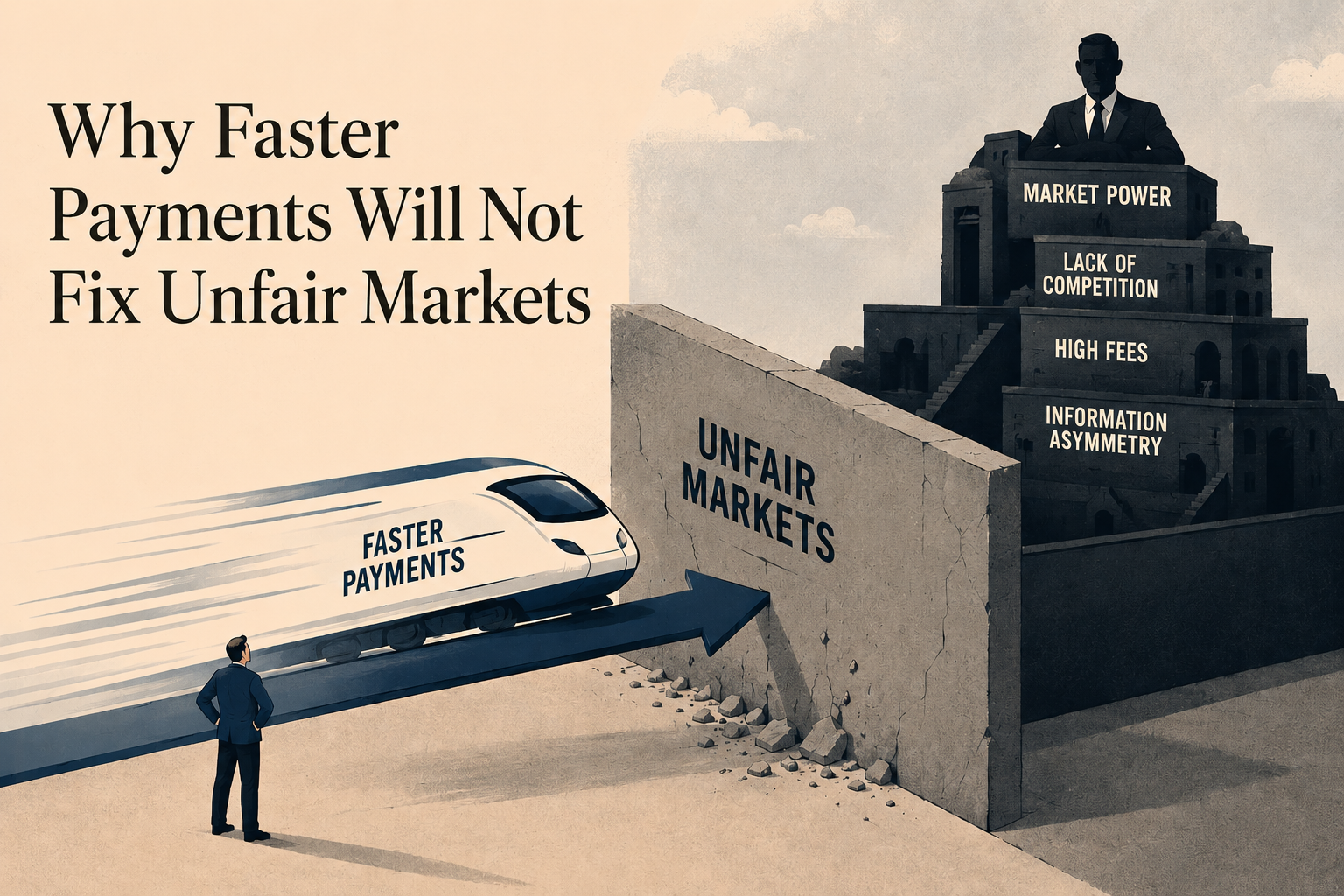
There is a reasonable objection here. Cash flow timing cannot compensate for undercapitalisation, low wages, unequal bargaining power or a late payment culture. It would be wrong, and politically convenient, to tell small firms and households that better literacy alone can solve structural unfairness. Financial education must not become the polite language we use to excuse bad market design.
But the answer is not to dismiss timing as too small or too technical. The answer is to treat it as shared economic infrastructure. Policy should reduce avoidable timing harm. Large buyers should not use small suppliers as unwilling lenders. Employers should recognise that pay cycles affect financial resilience. FinTech companies should design products that build judgement, not dependency. And education providers should stop treating operational financial knowledge as specialist knowledge reserved for finance teams.
The UK has begun to move in this direction. The Fair Payment Code, reforms to payment reporting and discussions around e-invoicing all point to a recognition that payment behaviour affects productivity and survival. Sage research with Cebr, based on more than 1.2mn anonymised invoices, found that 44 per cent of invoices were paid late and estimated that £112bn was locked up in late payments. Whether one accepts every estimate or not, the direction is clear: money delayed is not neutral. It changes decisions.
At the same time, the skills challenge is broader than small business finance. Lloyds Banking Group’s 2025 Essential Digital Skills report found that 82 per cent of UK labour force adults had essential digital skills for work, unchanged since 2023, leaving a significant minority without the digital capability now required for modern economic participation. The OECD has also warned that unequal access to 21st-century skills, including literacy, numeracy and problem-solving, constrains both fairness and growth. Cash flow timing sits at the intersection of these gaps: financial literacy, digital capability and economic agency.
For women and underrepresented founders, this is especially important. Access to capital is already uneven. Networks are uneven. Confidence can be uneven because experience is uneven. If timing knowledge is also uneven, then financial systems quietly reward those who have already been taught how money moves. That is not meritocracy. It is inherited fluency.
The next phase of financial inclusion should therefore be more practical and more precise. We should teach cash flow timing as a core business and workforce skill, not as a remedial topic for people who have made mistakes. We should help people understand the operating calendar of money: when revenue lands, when obligations fall due, when credit becomes expensive, when growth consumes cash, and when a profitable decision can still create a liquidity problem.
This is not glamorous work. It will not produce the language of disruption that the financial sector likes to attach to itself. But it may be one of the most useful forms of economic empowerment available to us. In a slower economy, with higher living costs and tighter margins, resilience will depend not only on how much money people and businesses can access, but on whether they understand the timing rules by which that money moves.
Timing is already a strategy. The question is who gets to use it.
Policymakers, employers, banks and platforms should stop treating cash flow timing as private anxiety and start treating it as public economic competence. If we want a more productive and inclusive economy, we cannot leave this knowledge to CFOs, procurement departments and those who learnt it the hard way. We need to teach it before the waiting begins.